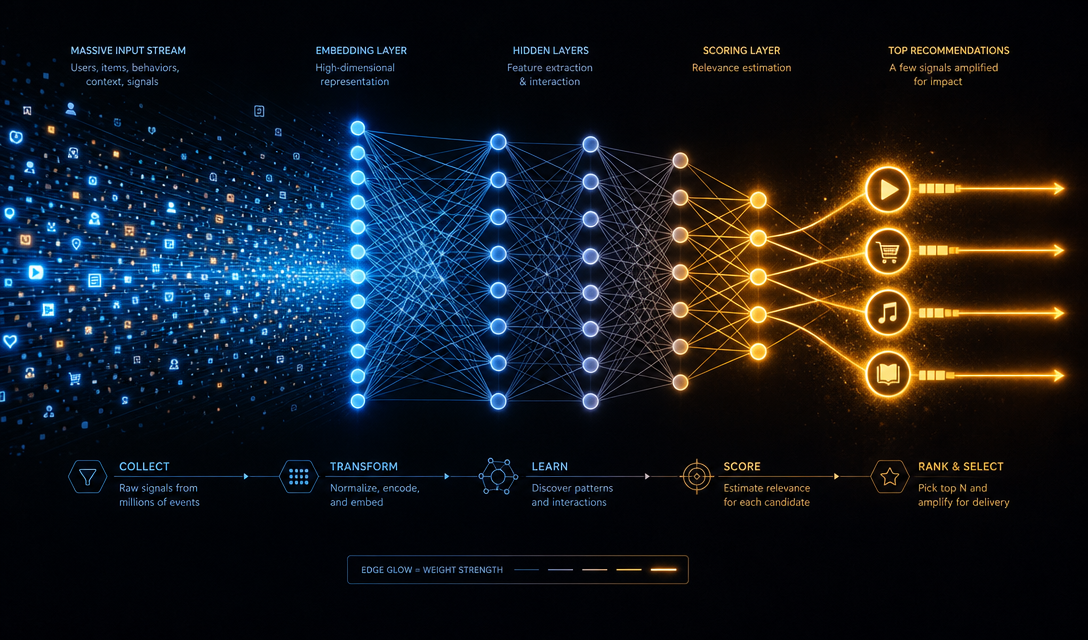
In May 2026, Forbes Tech Council published a piece declaring vibe marketing a new category. The framing: just as vibe coding lets developers describe intent and let AI handle implementation, vibe marketing lets founders describe goals and let AI handle distribution.
The term stuck immediately — because it names something founders have been living for a year.
But there's a catch. Most of what gets called vibe marketing today is missing the one ingredient that makes it actually work.
What Vibe Marketing Actually Means
The Forbes framing is useful: vibe marketing is the shift from managing marketing tools to orchestrating marketing agents. You stop scheduling posts and start directing a system that generates, adapts, and distributes content on its own — across channels, at native quality, without you babysitting it.
The analogy to vibe coding holds. A vibe coder doesn't write every function by hand. They describe what they want, review what the AI ships, and iterate. The output is still their product. The process is just compressed.
Vibe marketing works the same way. You describe what you're building and who you're building it for. The agent handles the rest: researching relevant topics, drafting platform-specific posts, scheduling for peak engagement, adapting tone for X versus LinkedIn versus a technical blog.
Done right, it replaces 3–4 hours of daily marketing work with a 5-minute review queue.
The Problem Nobody Mentions
Here's where most tools claiming to do vibe marketing fall short.
Every AI writing product asks you to describe your product. Explain your audience. Paste in some notes about what you want to say. Then it generates something generic — something that could have been written about any SaaS product in the space.
That's not vibe marketing. That's AI copywriting with extra steps.
The reason it fails is context. Or rather, the lack of it.
Real vibe marketing requires the agent to know what you actually shipped. Not a description you typed last Tuesday. Not a product page that hasn't been updated in two months. The actual commits, the actual features, the actual milestones.
A survey from viblo.asia in 2026 found that 99% of solopreneurs cite marketing and distribution as their #1 problem — ahead of funding, hiring, or product-market fit. The tools already exist. The problem is that none of them know what you built.
Why Context Is the Whole Game
In 2026, frontier AI models write detailed commit messages, structured Jira tickets, and thorough PR descriptions. A developer noted on Hacker News that this AI-driven quality improvement provides "incredibly rich, structured context for downstream tools to read."
That's the unlock.
If your marketing agent can read your codebase — your commits, your changelogs, your feature descriptions — it doesn't need you to explain yourself. It already knows what you shipped. It can write a specific, authentic post about the authentication refactor you pushed on Tuesday, not a generic "we improved our security" update.
Specificity is what makes content land. Generic AI marketing content is detectable — and audiences are increasingly tuning it out. The 4% of marketers who say AI-generated content is indistinguishable from human writing are working with tools that have deep product context. Everyone else is producing filler.
What an MCP Marketing Tool Actually Changes
The Model Context Protocol (MCP) is the infrastructure that makes context-aware marketing agents possible. It's the bridge that lets an AI tool read your codebase, understand your product state, and act on it — without requiring you to manually feed it information.
Most current MCP marketing tools are built for paid ads: Amazon Ads, Meta, TikTok, HubSpot. They pull campaign data and manage budgets through a chat interface. Useful for growth marketers. Not relevant for a solo founder who hasn't run an ad yet.
The missing piece is IDE-native content generation — an MCP marketing tool that lives where the founder already works, reads what they're actually building, and produces native content for the platforms where their audience lives.
In May 2026, Claude Code v2.1 shipped background agents that persist MCP configurations across session cycles. That's the kind of infrastructure change that makes always-on marketing agents viable — your content pipeline stays live across sessions without manual reconfiguration.
The Three Things Vibe Marketing Requires
If you want to evaluate whether a tool actually delivers vibe marketing — or just AI copywriting — check for three things:
1. Deep product context. Can the agent read your codebase, commits, and changelogs? Or does it rely on you to describe your product in a text box? The former produces specific, authentic content. The latter produces generic AI slop.
2. Platform-native output. X, LinkedIn, and a technical blog are completely different surfaces. A vibe marketing system should produce native content for each — not the same post reformatted. Character limits, tone, culture, and audience intent differ enough that repurposing rarely works.
3. Zero context-switching. The defining constraint for solo founders isn't quality — it's time and attention. A vibe marketing tool that requires you to open a separate dashboard, re-explain your product, and manually review 30 drafts has failed the design brief. The goal is 5 minutes a day, from inside your existing workflow.
Where This Goes
Vibe marketing as a category is real and it's growing fast. The $39B social media management market is being rearchitected around AI agents — and the founders who build consistent distribution habits now will have a meaningful head start when every tool in the space catches up.
But most of what's being marketed as vibe marketing today is AI prompting with a friendly UI. The actual unlock — reading your product's real context instead of asking you to describe it — is still rare.
The question to ask any tool calling itself a vibe marketing platform: does it know what you shipped last week? If the answer is no, you're still doing the hard part yourself.
VibeCom's Growth Autopilot is built as an MCP marketing tool that runs natively in Cursor and Claude Code — reading your codebase directly, generating platform-specific content, and routing it to your review queue in 5 minutes a day. It's the vibe marketing workflow for founders who are actually building something.