 Claude Code Marketing · Terminal workflow
Run your marketing from Claude Code.
VibeCom brings AI marketing agents into Claude Code over MCP. You describe what changed from the terminal, and it drafts product-grounded posts for X, LinkedIn, and your blog so you can review and publish without starting from a blank composer.
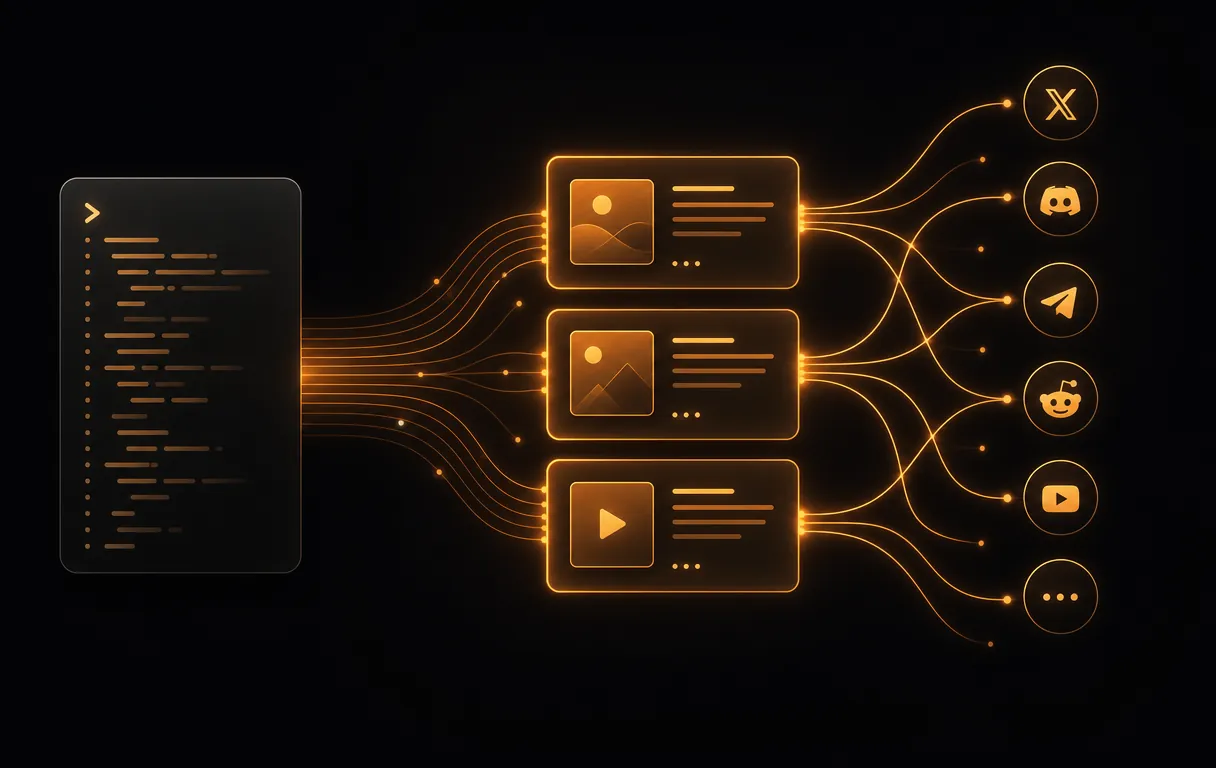
You ship in the terminal. Your marketing lives somewhere you never open.
The features ship. The launches happen. But the X post, the LinkedIn update, the blog draft — they sit on a to-do list because posting means leaving Claude Code, opening a marketing tool, and re-explaining a product the tool has never seen. So it does not get done, and the work you are proudest of goes unnoticed. Claude Code marketing closes that gap by drafting from the same place you build.
Marketing from Claude Code turns shipped work into content, without a context switch.
Marketing without leaving the terminal
You already run your whole build loop from Claude Code. Now the content marketing runs there too — same window, same flow, no separate tool to remember.
Posts grounded in what you actually built
Drafts start from your real product context and the work you just shipped, so they read like someone who knows the product — because the source is the product.
Review-ready work, not a second job
The agent does the drafting and preparation. Your job is judgment: approve the good ones, skip the weak ones, and keep the channel moving.
Terminal marketing automation in four steps, driven from your prompt.
Tell it what you shipped
From the Claude Code prompt, describe the feature, fix, or milestone in plain English. No dashboard, no context-switch — you stay in the terminal you already live in.
It drafts product-grounded posts
VibeCom pulls your product context, saved materials, channel personas, and history, then writes X, LinkedIn, and blog drafts that sound like your product — not generic AI filler.
Everything stays reviewable
Nothing is live yet. Drafts queue for your approval. Edit, reject, schedule, or approve — from Claude Code or the dashboard, whichever is open.
Approved posts publish themselves
Connected channels auto-publish approved posts at their scheduled slot. Your shipped work becomes a steady content stream you can review before it goes live.
Channel-native, not the same post copy-pasted twice.
One shipped feature, two drafts. The agent writes for each channel's voice — punchy and hook-first for X, longer and context-rich for LinkedIn — grounded in your real product, not a generic template.
Just shipped usage-based billing. Meter any event, set a price, and Stripe handles the invoicing. Took the whole "how do we charge for this" question off the table for our customers. The part I'm proud of: zero config for the common case. 👇
We just rolled out usage-based billing, and it changed how our customers think about pricing. Instead of guessing a plan tier upfront, they pay for what they actually meter. Under the hood it's Stripe, but the win is that setup is one line for the common case. If you're weighing seat-based vs. usage-based, happy to share what we learned.
Illustrative drafts for a fictional product. Your drafts use your own product context and product voice.
Connect Claude Code to VibeCom in 30 seconds.
Two commands and an OAuth approval. After that, Claude Code can list your channels, draft posts, generate images, and publish approved drafts through VibeCom.
claude mcp add --transport http vibecom https://www.vibecom.app/mcpRun this once in your terminal. It registers VibeCom as an MCP server for Claude Code over Streamable HTTP.
/mcpOpen a Claude Code session and run /mcp. Approve VibeCom through OAuth in the browser, and the token binds to your account.
claude "draft a launch post about today's release"Describe what you shipped in plain English. Claude Code calls VibeCom to draft, queue, and — once you approve — publish.
Things you can ask Claude Code to do.
"List my connected channels and their schedules.""I just shipped dark mode. Draft an X post and a LinkedIn update.""Turn this week's changelog into a short blog post and queue it.""Generate an image for the launch post and attach it.""Show me what's pending review, then publish the approved ones."
Claude Code is one entry point. The whole platform is behind it.
Marketing from Claude Code is one surface of VibeCom's vibe marketing platform: AI marketing agents that run content across X, LinkedIn, and your blog, monitor competitors, and mine SEO opportunities. Everything you draft from the terminal stays connected to the same product context and review workflow as the rest of your marketing work.
A Claude Code marketing agent writes the post. A scheduler only moves it.
Tools like Buffer and Typefully assume you already wrote the content — they put it on a calendar. That leaves the hardest part, the writing, on you. VibeCom starts a step earlier. It reads your product context and what you just shipped, drafts channel-native posts in your voice, and only then schedules and publishes the ones you approve.
That is the difference between terminal marketing automation and a posting queue. One removes the work; the other just organizes work you still have to do. For builders and technical teams who would rather ship than stare at a blank composer, removing the first draft work is the whole point.
Common questions before you connect
Claude Code marketing means running your content marketing from the Claude Code terminal instead of a separate dashboard. VibeCom connects to Claude Code over MCP, so you describe what you shipped in plain English and it drafts product-grounded posts for X, LinkedIn, and blogs that you review before anything publishes.
Run claude mcp add --transport http vibecom https://www.vibecom.app/mcp in your terminal, then open a Claude Code session and run /mcp to authenticate. After that, Claude Code can list your channels, draft posts, generate images, and publish approved drafts through VibeCom.
Nothing publishes before you approve it. VibeCom drafts content for review; you approve, edit, reject, or schedule before connected channels auto-publish approved posts.
A scheduler moves posts you already wrote onto a calendar. VibeCom is a Claude Code marketing agent that writes the posts first — product-grounded, channel-native drafts created from what you shipped — then schedules and can auto-publish them after your review.
The same way you built it: from the terminal. Instead of opening a separate marketing tool and starting from a blank page, describe what you shipped in plain English from your Claude Code session. A marketing agent that reads your product context can draft channel-native posts — short and punchy for X, longer for LinkedIn — and queue them for review. You approve in about five minutes, and the posts go out on schedule. The key is removing the context switch: when marketing lives in the same terminal where you code, it stops being a separate job you avoid and becomes one more command you run.
Ship the feature. Let Claude Code ship the marketing.
Connect VibeCom over MCP and run your content marketing from the terminal where your product context is already active.