TL;DR / Key Takeaways
- Founders are assembling sophisticated AI dev stacks in 2026 — Cursor, Claude, Lovable, Bolt — but consistently skipping the first step: validating the idea before prototyping
- A recent r/saasbuild thread on "the ideal AI dev stack" didn't mention validation once
- Vibe coding without a validated PRD doesn't just waste time — it trains your AI agent to build the wrong thing fast
- The missing layer sits above your coding tools: market validation, TAM/SAM/SOM, competitor analysis, and a structured PRD
- Adding this layer takes an afternoon. Skipping it can cost weeks
Last week, a thread on r/saasbuild asked founders to share their current AI dev stack.
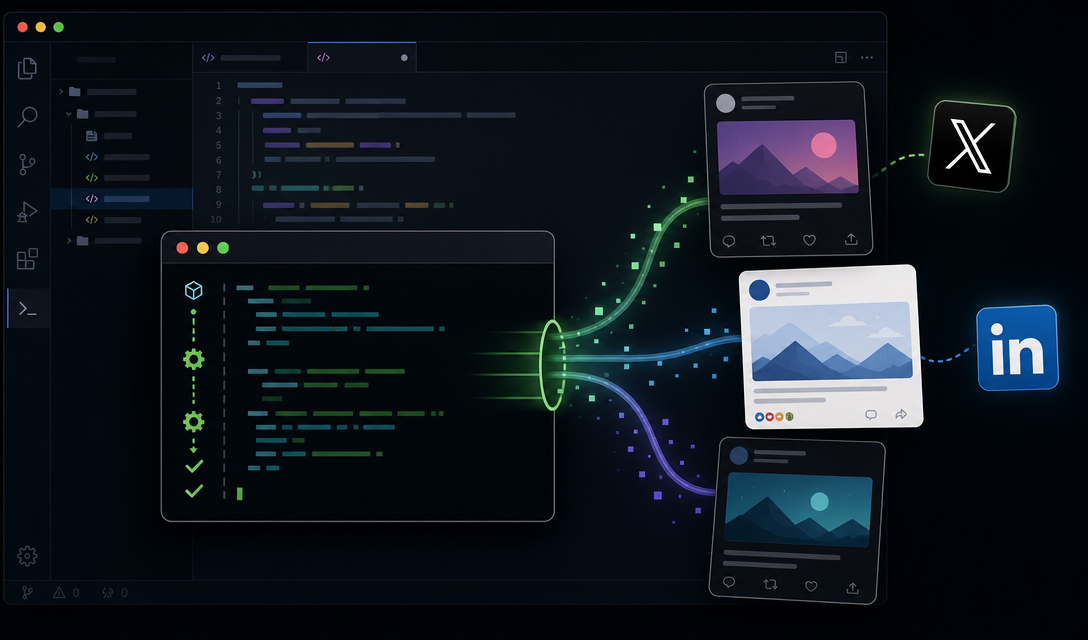
The responses were predictable in a good way: Cursor for coding, Claude for reasoning, Lovable or Bolt for rapid prototyping, Vercel for deployment, Supabase for the database layer.
Sophisticated stacks. Real tools. Founders who clearly know what they're doing.
But something was missing from every single response.
Nobody mentioned validation.
Not market research. Not TAM. Not a PRD. Not even a basic "does anyone actually want this?" step.
The stack went straight from idea to prototype.
Why This Gap Is Getting More Expensive
Here's the thing about vibe coding: it's genuinely fast. Founders are shipping in days what used to take months. DeepSeek V4-Pro now matches Claude Opus 4.6 on coding benchmarks at a fraction of the cost. GPT-5.5 topped CursorBench at 72.8%. The tools have never been better.
But speed amplifies direction.
If you're building the right thing, faster tools mean faster success. If you're building the wrong thing, faster tools mean a more expensive failure — faster.
A recent guide on vibe coding best practices put it plainly: "Most failed builds start the same way: open the coding tool, type a prompt, figure it out as you go."
The fix isn't a better model. It's knowing what you're building before you open the model.
What the Missing Layer Actually Looks Like
The founders who validate before they build aren't doing something exotic. They're answering four questions before they write a single prompt:
1. Is there a real market here? Not a gut feeling. Not a ChatGPT estimate. Actual TAM/SAM/SOM — who's in this market, how big is the addressable slice, what's the realistic revenue ceiling for a solo founder?
2. Who's already in it? A live competitor scan — not just the obvious names, but the real alternatives your target customer is already paying for. This is where most founders get surprised. The competition isn't always what you think.
3. Who's the specific customer? Not "developers" or "small businesses." A real ICP: what they do, where they spend time, what they're currently using, and what would make them switch.
4. What does the PRD say? A structured Product Requirements Document that constrains what the AI agent builds. This is the "rails" step — the document that tells Cursor or Lovable exactly what to build, in what order, with what constraints.
Without a PRD, AI coding agents default to what looks like good engineering — not what solves the actual problem. A Hacker News thread on "Why Vibe Coding Fails" surfaced this directly: agents left without business requirements tend to over-engineer, adding schema complexity and unnecessary abstractions that look thorough and break under real usage.
The Stack, Completed
Here's what the full AI dev stack looks like when the missing layer is included:
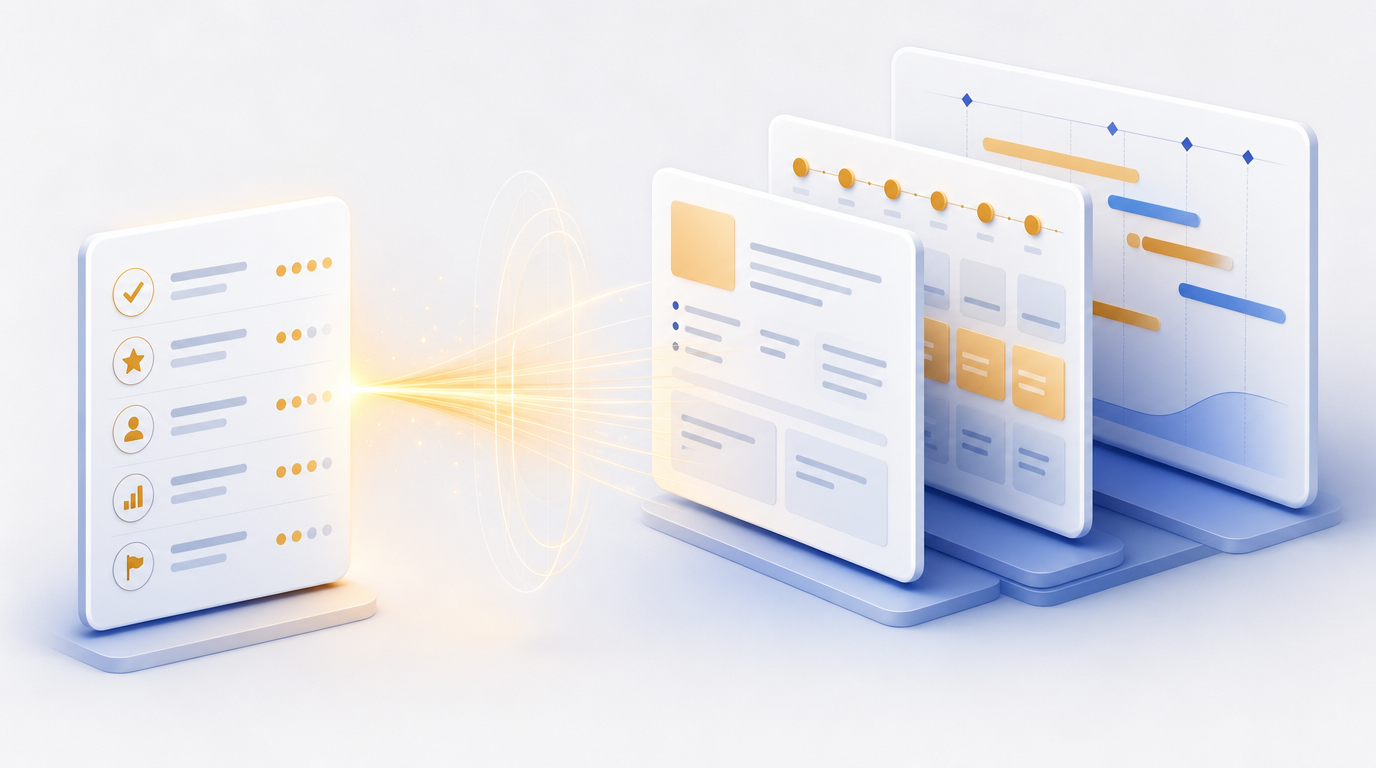
Layer 0 — Validation (the missing one) → Market sizing: TAM/SAM/SOM from live data sources → Competitor scan: who's already in this space, what they charge, where they're weak → ICP definition: who the customer is and what they'll actually pay → PRD generation: structured requirements before any code runs
Layer 1 — Prototyping → Cursor, Lovable, Bolt — with the PRD as the constraint document
Layer 2 — Infrastructure → Vercel, Supabase, Railway — the deployment and data layer
Layer 3 — Distribution → GTM strategy, SEO, community seeding — how the right people find it
The founders who skip Layer 0 and jump to Layer 1 aren't being reckless. They're doing what the tools encourage. Cursor and Lovable are designed to get you building immediately — that's their value proposition.
But the tools don't know if what you're building has a market. That judgment call still belongs to the founder.
How Long Does Layer 0 Actually Take?
This is the question that matters. If validation takes weeks, most founders will skip it — and rationally so. A week of research before a weekend prototype doesn't make sense.
But agentic AI has changed the economics here too.
A multi-model validation workflow — pulling live competitor pricing, running real market sizing calculations, generating a structured PRD — can now run in minutes, not weeks. The same AI capabilities that make coding fast make research fast.
The gap isn't time. It's habit. Founders open the code editor first because that's the default. The validation step has to be built into the workflow before the code editor opens.
The Practical Test
Before your next build, try this:
- Write down the market size you expect — total addressable market, your realistic slice, the revenue ceiling
- Name three products your target customer is already paying for that partially solve this problem
- Describe the customer in one paragraph — their job, their current workflow, what they hate about it
- Write a one-page PRD: what the product does, what it doesn't do, and what success looks like in 90 days
If you can't answer all four in an afternoon, you're not ready to open Cursor.
If you can answer them — and the answers are grounded in real data, not assumptions — you've built the rails. The vibe train can go full speed.
FAQ
Do I need to validate every idea before building? Yes — but validation doesn't have to be slow. A structured AI-powered validation run (market sizing, competitor scan, PRD) takes minutes with the right tools. The question isn't whether to validate, but how fast you can do it.
What's the difference between validation and market research? Validation answers "should I build this?" Market research answers "what does the market look like?" Real validation combines both — live competitor data, TAM/SAM/SOM, and a structured PRD that constrains the build.
Can't I just use ChatGPT to validate my idea? A single ChatGPT prompt will produce a confident-sounding answer with no live data. It has no incentive to say "I don't know" — it's trained to be helpful. Real validation requires a multi-step agentic workflow with live web research, not one LLM prompt.
What's a PRD and why does it matter for vibe coding? A Product Requirements Document defines what you're building, who it's for, and what success looks like — before you write a prompt. AI coding agents left without a PRD default to over-engineering. A PRD constrains the agent and dramatically reduces hallucinated complexity.
How do I know if my validation is good enough to start building? You should be able to answer: who is the specific customer, what are they currently paying for this problem, what's the realistic revenue ceiling, and what does the MVP do (and not do). If any of those answers are vague, the validation isn't done.