Building in public is one of the highest-ROI things a solo founder can do. It builds an audience before you need one, creates social proof while you're still figuring things out, and turns your daily work into compounding distribution.
The problem: almost nobody actually does it consistently.
Not because they don't want to. Because they're building. And build in public automation — the idea that you can systematize the consistency part without losing the authenticity — sounds either too good to be true or too generic to bother with.
This post is about what actually works in 2026, and why the tools that failed founders before are different from what's possible now.
Why Build in Public Fails (It's Not Discipline)
The standard advice for building in public is "just be consistent." Post every day. Share your numbers. Be vulnerable.
That advice treats it as a willpower problem. It isn't.
A developer on r/vibecoding put it plainly: vibe coding made building apps easier than ever, but it didn't solve distribution. They compared it to hiring a Fiverr dev three years ago — someone else can now do the technical work faster, but you're still the one responsible for getting users. The bottleneck didn't disappear. It shifted.
The real failure mode for build in public isn't laziness. It's context-switching cost. You're deep in a debugging session, you fix something meaningful, and then you're supposed to open Twitter, remember what you just fixed, write something worth reading, and post it — all while your brain is still in code mode.
Most founders don't. The moment passes. The streak breaks. Eventually they stop trying.
What "Automation" Actually Means Here
When founders hear "build in public automation," they usually think: a scheduler. Something that posts on their behalf at 9am.
Schedulers solve the wrong problem. They help you post content you've already written. The hard part is writing it.
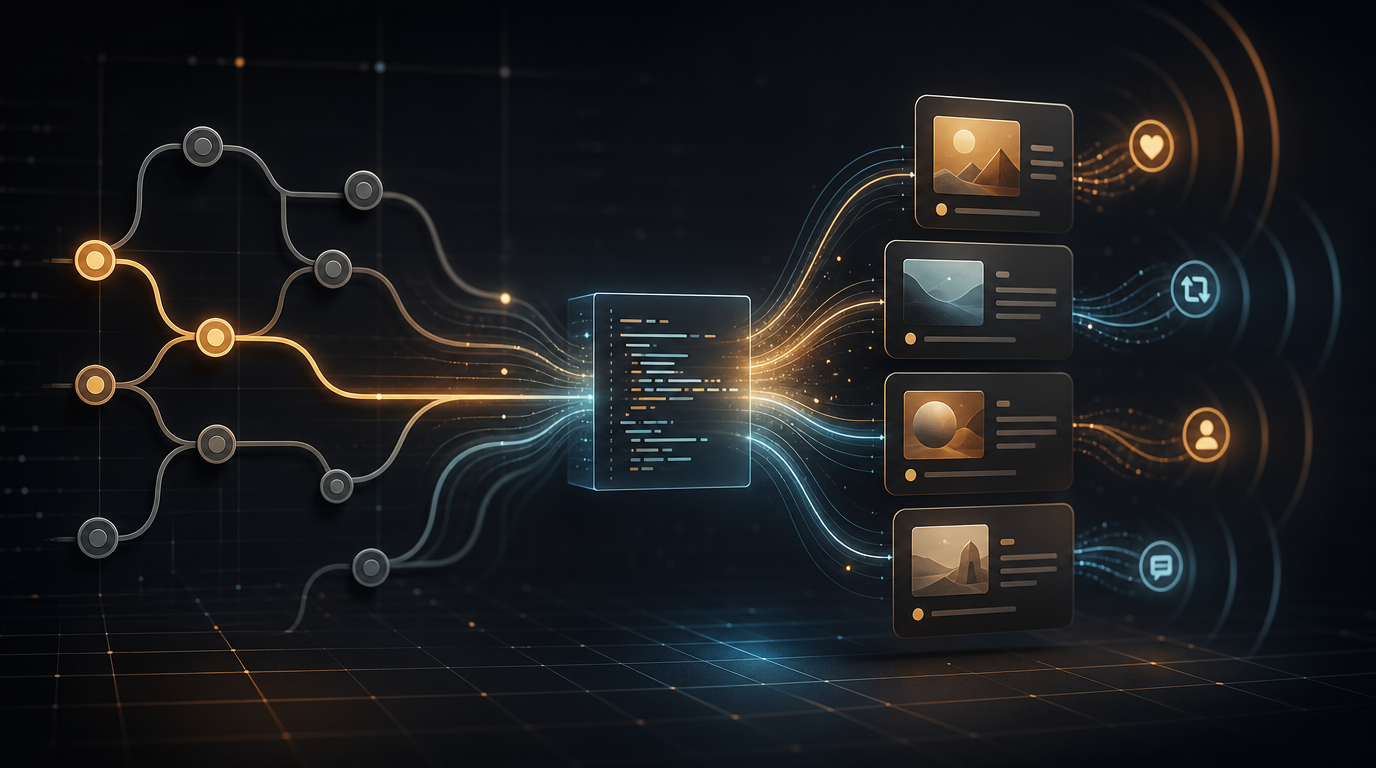
Real build in public automation has to solve the upstream problem: turning your actual work — commits, feature launches, bugs fixed, decisions made — into content that reads like a real person wrote it, not a marketing template.
That requires something schedulers don't have: product context.
A developer on Hacker News described leaving Claude Code sessions idle for hours or days and coming back to full context — no re-explaining, no onboarding, just picking up where they left off. That's what good tooling does with context. It holds it so you don't have to.
Build in public automation needs to work the same way. The tool should know what you shipped, why it matters, and how to translate that into posts native to each platform — without you explaining it from scratch every time.
The Distribution Problem Is Real
Here's a signal worth sitting with: a developer on r/saasbuild wrote that "shipping isn't a competitive advantage anymore. Distribution is."
That's not hype. AI has compressed the cost of shipping software to near-zero. What separates products that grow from products that don't is no longer technical execution — it's consistent, authentic distribution.
For solo founders, that creates a specific problem. You're good at building. You can ship fast. But you have one person to do everything, and content marketing is the thing that falls off the list first when things get busy.
This is why build in public automation matters more in 2026 than it did two years ago. It's not a nice-to-have. It's the only way a solo founder competes on distribution without hiring a marketing team.
What the Workflow Actually Looks Like
Here's what a working build in public automation system looks like for a solo technical founder in 2026:
1. Capture context at the source
The best content comes from what you just shipped, not from a weekly retrospective. Automation that reads your commits, pull requests, and codebase can capture context while it's fresh — without you writing a single word.
2. Generate platform-native drafts
A tweet about your feature launch reads completely differently than a LinkedIn post or a Hacker News comment. Platform-aware generation matters. Generic AI writing that says the same thing five ways isn't content — it's noise.
3. Keep the human in the loop
The review step is not optional. Good automation surfaces drafts; you approve, reject, or quick-edit in five minutes. The goal is a 5-minute morning review, not zero involvement. Zero involvement produces generic content. Five minutes keeps it authentic.
4. Publish and schedule automatically
Once you've approved, distribution should be hands-off. API-connected publishing to X, LinkedIn, and other platforms closes the loop.
Why This Works When Schedulers Didn't
The generation quality gap is real. Earlier tools (and most current schedulers with "AI" bolted on) produce content that could apply to any startup. It's factually correct but lacks the specificity that makes people pay attention.
The difference with context-aware automation: a post that references your actual Tuesday commit, the bug you fixed at 2am, or the customer complaint that drove a product decision — that post is specific enough to be real. Readers can tell the difference. So can the algorithms.
The other difference is persistence. Schedulers need you to supply content indefinitely. Context-aware automation generates from what you're already doing — so as long as you're building, there's material to work from.
The Practical Starting Point
If you're a solo founder who wants to actually build in public consistently in 2026, the minimum viable system is:
- An agent that reads your product context (codebase, commits, milestones)
- Platform-specific content generation — not one-size-fits-all
- A lightweight daily review — 5 minutes max
- Automated publishing once approved
The tool doesn't have to be complex. It has to know what you built.
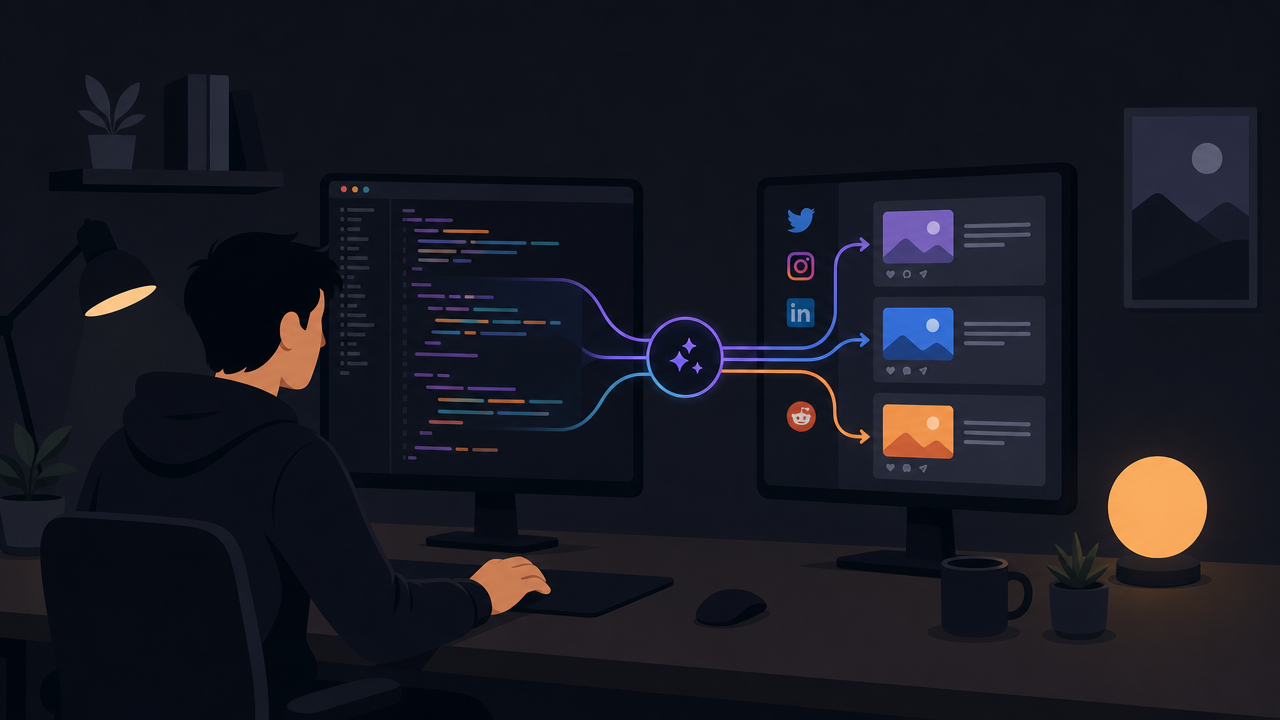
VibeCom is built around exactly this workflow — an IDE-native growth agent that reads your codebase via MCP and generates native posts for 10+ platforms, queued for a quick morning review. No dashboard to open. No form to fill out. No context to re-explain.
Build in public automation that works starts with building in the same place you already are.
VibeCom is the vibe marketing platform for solo technical founders. Growth Autopilot lives in your IDE via MCP and handles content generation, scheduling, and publishing — so you can stay in your codebase.