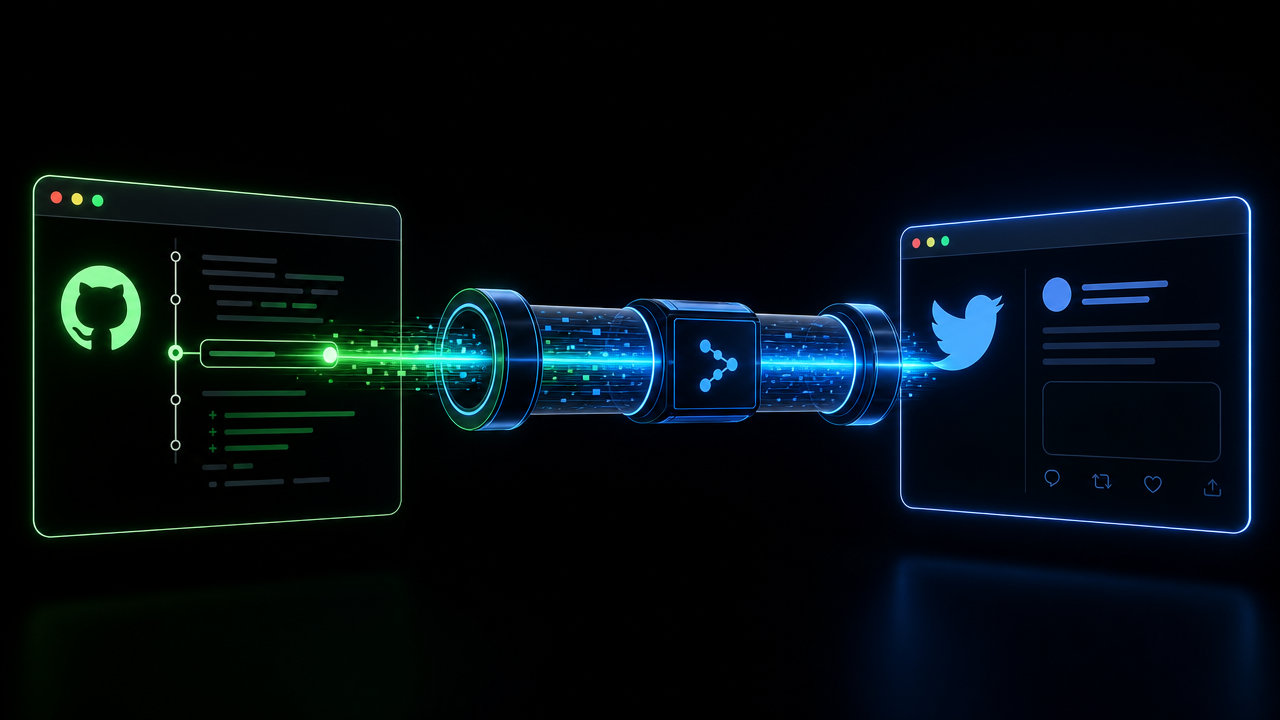
Every time you push a commit, merge a PR, or ship a feature, something worth sharing just happened. But by the time you remember to post about it — if you remember at all — the moment is gone. You're already deep in the next problem.
Auto-posting to Twitter from GitHub isn't a new idea. But the tools that actually make it work for technical founders in 2026 look very different from the Zapier workflows and cron-job hacks of five years ago. This guide covers what's available, what works, and why the architecture matters.
Why Founders Stop Posting (It's Not Laziness)
One founder writing about their Product Hunt launch put it plainly: "Distribution is how you get users in the door. I have to actively force myself out of the code to focus on it."
The forcing is the problem. When posting requires a context switch — closing your IDE, opening a dashboard, describing your product to an AI that doesn't know what you shipped — the friction compounds. Most founders do it twice, then stop.
The goal of auto-posting from GitHub to Twitter isn't just saving time. It's eliminating the decision entirely. If a commit can trigger a post, you don't have to remember.
The Three Approaches (and Their Trade-offs)
1. Webhook → Zapier/Make → Buffer
The classic approach: GitHub webhook fires on push, Zapier catches it, formats a message, sends it to Buffer for scheduling.
Works. Gets you to zero from nothing. But the output is mechanical — "New commit: fix auth bug" — not something a real person would say. The AI layer in tools like Buffer or Make's automation doesn't know your product, your users, or why that commit mattered.
Best for: Simple milestone alerts ("v2.0 just shipped"). Not for ongoing authentic content.
2. GitHub Actions → Custom Script
More flexible. Write a GitHub Action that runs on push or release, calls an LLM API directly, and posts via the Twitter API.
You control everything: the prompt, the voice, the trigger conditions. A release tag can generate a thread; a specific label can fire a product update.
Best for: Developers who want full control and don't mind maintaining it. Costs: ~$5/mo in API calls for a solo founder's commit cadence.
The catch: You have to write the prompt. Which means you're back to the same problem — describing your product and context to an AI that doesn't actually know it.
3. MCP-Native Growth Agent
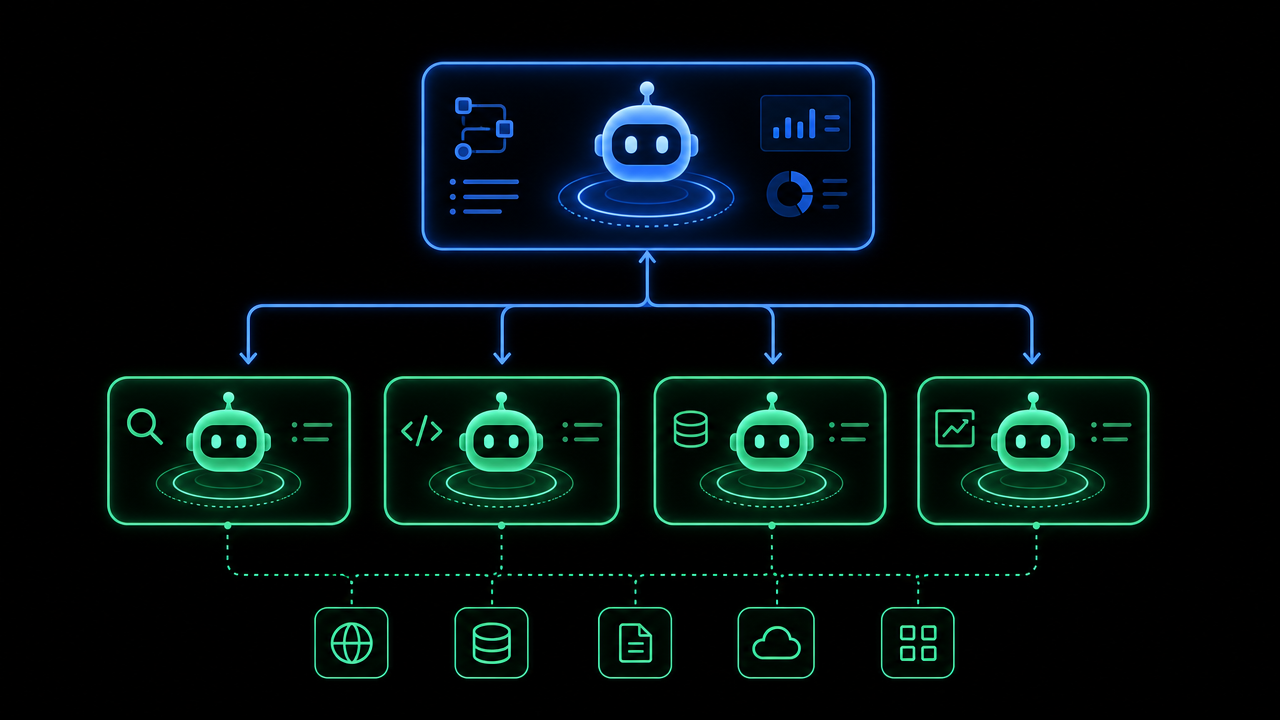
This is the 2026 approach. Instead of a webhook firing after the fact, an MCP (Model Context Protocol) server lives inside your IDE and reads your codebase, commits, and product context directly.
When content is generated, it already knows:
- What you shipped and why
- Your product's voice and positioning
- Which platforms your audience actually uses
- What you've already posted (so it doesn't repeat)
The result is posts that sound like you wrote them — because the context comes from what you actually built, not a form you filled out six months ago.
AdKit recently demonstrated this pattern for ad campaigns: their MCP server lets AI agents manage Google and Meta campaigns through a draft-approval flow, eliminating the need to navigate dashboards at all. The same architecture applies to content distribution.
What Good Auto-Posting Actually Looks Like
The output matters more than the mechanism. Here's the difference:
Webhook approach output:
"Just pushed to main: update payment flow and fix edge cases in auth. #buildinpublic"
MCP-native output (context-aware):
"Rewrote the payment flow today. The old version had a silent failure case for international cards that took me two weeks to find — because the error only appeared in production. Fixed. Users outside the US should stop seeing checkout drop-offs."
The first tells people you shipped something. The second tells them why it mattered — the kind of specific, honest post that actually builds an audience.
The difference is context. The MCP agent knows the codebase, knows the commit message, and knows the product well enough to translate both into something worth reading.
Setting Up the MCP Approach with VibeCom
VibeCom's Growth Autopilot lives inside Cursor, Claude Code, and VS Code via MCP. Setup takes about 5 minutes:
- Install the VibeCom MCP server into your IDE config
- Connect your X (Twitter) account via OAuth
- Add your product context (one-time setup — the agent reads your codebase for the rest)
After that, the agent monitors your commits and product activity. Each morning, a queue of drafted posts appears for review — approve, edit, or reject in 5 minutes. Approved posts go out automatically.
You're not writing posts. You're not describing your product to a form. You're reviewing what your AI growth agent wrote based on what you actually built.
The Distribution Gap That Matters
Status Hero reached 7-figure ARR. Their founder's retrospective on their best distribution channel: they stopped fighting for attention through landing pages and instead focused on "existing where the workflow already lived" — meeting teams inside tools they already had open.
For technical founders, the workflow that's always open is the IDE. The opportunity isn't to build a better dashboard. It's to bring distribution into the environment where building happens.
Auto-posting from GitHub to Twitter is one small piece of that. The larger shift is treating your growth layer the same way you treat your CI/CD pipeline: automated, observable, and integrated with how you actually work.
Which Approach Is Right for You?
| Approach | Setup time | Authenticity | Maintenance | Cost |
|---|---|---|---|---|
| Webhook → Zapier → Buffer | 30 min | Low | Low | $20–40/mo |
| GitHub Actions + custom script | 2–4 hrs | Medium | High | $5–10/mo |
| MCP-native agent (VibeCom) | 5 min | High | None | $99/mo |
If you're posting once a month and just want a milestone alert, the Zapier route is fine. If you're building in public and want content that actually grows an audience — posts that feel like you wrote them, consistently, without a daily time tax — the MCP approach is the only one that scales without degrading.
Distribution is the problem worth solving. The tooling is finally catching up.
VibeCom is the vibe marketing platform built for solo technical founders. The Growth Autopilot lives in your IDE via MCP — commit to GitHub, review posts in 5 minutes, publish to 10+ platforms automatically.