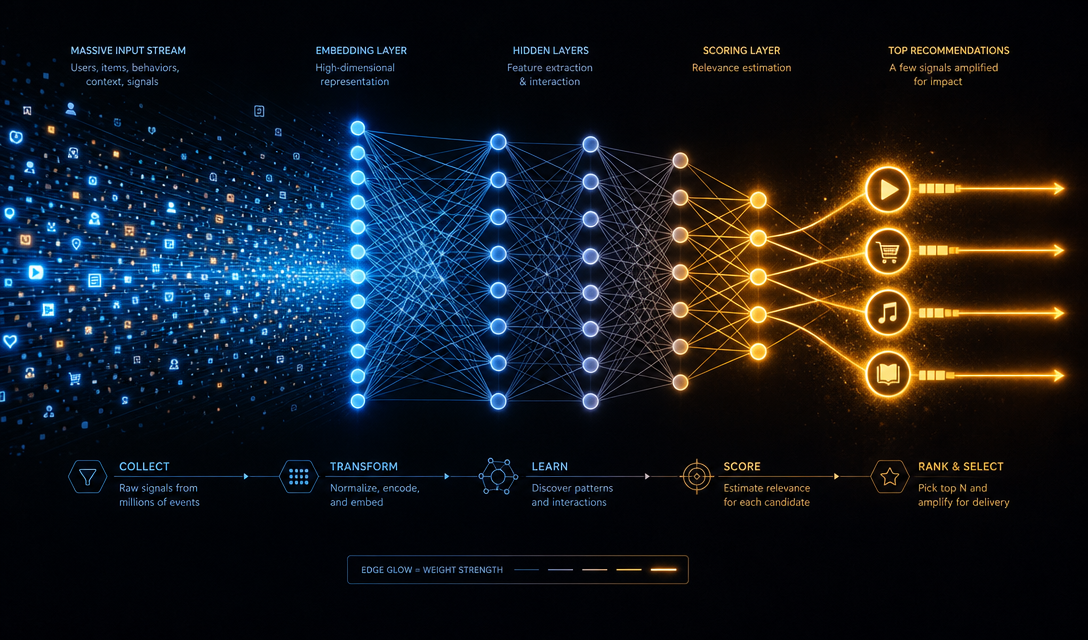
On May 15, 2026, X quietly pushed a commit to their public GitHub repo — xai-org/x-algorithm — that replaced the recommendation system they'd been running since 2023. The new model is called Phoenix. It's a transformer architecture ported directly from xAI's Grok-1, and it is now the core ranking engine deciding what 500 million daily posts get amplified — and what doesn't.
For content creators and technical founders trying to grow on X, this is not a minor tweak. The signal weights changed. The architecture changed. And if you're still operating on 2023 assumptions about what the algorithm rewards, you're flying blind.
Here's what actually changed, why it matters, and what to do differently starting now.
TL;DR
- Phoenix is a transformer-based model, not a rules-based ranker. Neural probabilities replace hand-engineered features.
- Reply = 13.5x a like. Repost = 20x. Block = up to -74x. These weights are now public.
- First-hour engagement is algorithmically critical — Phoenix amplification decisions happen fast.
- Posting too frequently suppresses your reach via the Author Diversity Scorer.
- External links get near-zero distribution unless you're Premium.
- Premium subscribers get a 2x–4x reach boost for content served to non-followers.
What Phoenix Actually Is
Previous versions of the X algorithm were largely rule-based systems with hand-engineered features — human-curated signals telling the ranker what to look for. Phoenix is different in a fundamental way.
It's a transformer model with 256-dimension embeddings, 4 attention heads, and 2 transformer layers. It runs as a single end-to-end pipeline via phoenix/run_pipeline.py, integrating retrieval and ranking into one entry point that mirrors the production system. X also released a 3 GB mini-model checkpoint for inference.
The architecture shift matters because neural models don't follow rules — they learn patterns. Phoenix was trained on real engagement data from X's full user base. That means it reflects what users actually do, not what X's engineers decided should matter. If the real pattern of engagement on X is that replies and long dwell time predict retention better than likes, Phoenix learned that — because the data showed it.
Every For You feed load now filters 500 million daily posts down to 1,500 candidates in under 200ms. Of those, 50% come from accounts you follow; 50% come from outside your network. Phoenix ranks both pools using the same 11 neural engagement probabilities.
The 11 Signals Phoenix Scores
Here are the neural probabilities Phoenix estimates for every candidate post:
- P(dwell) — how long will the user pause on this?
- P(favorite) — will they like it?
- P(reply) — will they reply?
- P(repost) — will they repost?
- P(profile_click) — will they click through to the author's profile?
- P(follow_author) — will they follow the author after seeing this?
- P(bookmark) — will they save it?
- Plus additional probabilities covering negative signals and other engagement patterns
These aren't weighted equally. And the weights are now public.
The Weight Table That Changes Everything
This is the part worth internalizing:
| Action | Multiplier vs. a Like |
|---|---|
| Author reply to a comment | 150x |
| Repost | 20x |
| Bookmark | 10x |
| Reply | 13.5x |
| Like | 1x (baseline) |
| Block / Mute | up to -74x |
Read that top row again. When you reply to a comment on your own post, the algorithm treats it as 150 times more valuable than someone liking it. That's not a rounding artifact — it's a design decision. X wants conversations, not passive consumption. An author who replies signals that real engagement is happening in that thread.
The negative signal asymmetry is just as important. A single block or mute undoes dozens of likes in reach scoring. That's not a warning about trolling accounts — it's a warning about posting content that generates resentment in any segment of your audience. If your posts regularly get muted (people who want to suppress you without the drama of blocking), it compounds.
The Author Diversity Scorer: Why Posting More Hurts You
One of Phoenix's components — the Author Diversity Scorer — explicitly attenuates reach when the same account appears too frequently in a user's feed over a short window.
This kills the "post 5x a day" strategy that many growth accounts built their audiences on. Under Phoenix, high-frequency posting doesn't just fail to help — it actively suppresses the reach of each individual post by reducing the probability that X surfaces you again before the previous post has had time to breathe.
The new math: fewer posts, each optimized for deep engagement, outperforms volume. One post that earns 10 replies and 5 reposts in two hours beats three posts that get 30 likes total.
First-Hour Velocity Is Now a Gating Signal
Phoenix uses first-hour engagement as a primary amplification signal. If a post earns strong engagement — especially replies and reposts — within the first 60 minutes, it gets pushed into the broader discovery pool. If it doesn't, the window closes fast.
Practical implication: the time you post matters more than it used to, but the quality of the first replies matters most of all. A post that lands in front of 100 engaged readers at 9am will outperform the same post landing in front of 1,000 passive readers at 2pm.
This is also why replying to comments on your own posts quickly becomes a technical growth strategy under Phoenix — not just good manners. The 150x author-reply weight kicks in hardest in that first hour, when the algorithm is still making its amplification decision.
The Link Penalty Is Now Algorithmic, Not Manual
External links have always had lower organic reach on X — this was widely observed but never confirmed. Phoenix makes it structural: posts with external links receive near-zero distribution for non-Premium users. The model learned that links correlate with lower dwell time and lower engagement rates (people leave the platform), so it downweights them.
If you're promoting a product or blog post, the old playbook of tweeting the link directly is now actively harmful to your reach. The better approach: post the insight or story as native content, put the link in the first reply.
What Premium Buys You Under Phoenix
The algorithmic advantages of X Premium got more concrete with Phoenix:
- 2x reach boost for content served to non-followers (out-of-network distribution)
- 4x reach boost for in-network content (posts surfaced to your existing followers)
- Median impressions: Premium accounts see 600–1,550 per post; free accounts median under 100
For technical founders building in public, the math is straightforward: Premium's reach multiplier compounds. If your posts are earning strong engagement signals and you're on Premium, Phoenix amplifies that signal harder. If you're not on Premium and generating the same engagement, the ceiling is much lower.
This isn't a pay-to-win criticism — it's a structural reality of how Phoenix was trained and what it's optimizing for. X is a business. The model reflects that.
Sentiment Analysis: Phoenix Uses Grok Under the Hood
Phoenix incorporates sentiment analysis via Grok to evaluate post tone. The model favors constructive and positive dialogue — posts that generate negative sentiment signals (heated arguments, inflammatory framing) get suppressed.
This has a counterintuitive implication for "hot take" content strategies. A post that's genuinely provocative but generates thoughtful debate may do well. A post that's just inflammatory and generates angry replies with lots of blocks may crater your reach score. Phoenix distinguishes between those patterns — or at least, it tries to.
For technical founders writing from a genuine point of view, this is actually good news: authentic opinions that resonate with your audience will tend to generate replies and bookmarks, not blocks. The model rewards real signal.
What This Means for Your X Strategy in 2026
Here's the updated playbook based on what Phoenix actually rewards:
1. Optimize for replies and author engagement, not likes. Likes are the cheapest signal in the Phoenix weight table. Structure your posts to invite replies — specific questions, genuine dilemmas, strong opinions that deserve a response. Then reply back fast.
2. Post less, make each post count. The Author Diversity Scorer penalizes high-frequency posting. Aim for 1–2 posts per day maximum, each with enough substance to earn engagement. Volume is now a liability.
3. Never put a link in your post body. External links kill organic reach. Write the full idea as native content. Drop the link in the first reply if you need to share it.
4. Treat the first hour as a launch window. Stay available to reply to comments within the first 60 minutes. That engagement velocity is what triggers Phoenix's amplification. If you're posting and disappearing, you're leaving amplification on the table.
5. Protect your sentiment score. Avoid content that generates blocks and mutes. Provocative is fine; inflammatory is not. The difference is whether the people who disagree with you engage with your argument or suppress your account.
6. Reconsider Premium if you're building in public. A 2–4x reach multiplier on content that already earns strong engagement signals compounds meaningfully over months. The ROI calculation isn't about vanity metrics — it's about whether the amplification accelerates real growth.
The Bigger Picture: Algorithmic Transparency Is Rare — Use It
X publishing Phoenix's architecture and weights on GitHub is genuinely unusual. Most platforms treat their recommendation systems as closely held trade secrets. Meta doesn't publish Facebook's ranker weights. YouTube's signals are inferred from creator experiments, not documentation.
When a platform shows you exactly what it rewards, the correct response is to read it carefully and adjust — not to keep doing what worked in 2023.
For technical founders building in public, this is an information advantage. Most content creators won't read the GitHub commit. They'll keep chasing likes and posting links and wondering why their reach is flat. The ones who understand that a reply is worth 13.5 likes, that author replies are worth 150, and that first-hour velocity is the amplification gate — those are the accounts that will grow on X in 2026.
Phoenix didn't make X harder to grow on. It made it more legible. That's a good thing for anyone willing to actually read the documentation.
Building in public and tired of guessing what actually works for distribution? is a marketing agent for technical founders — it helps you generate platform-native content from your product updates, and never makes you leave your terminal. No dashboards, no blank boxes.