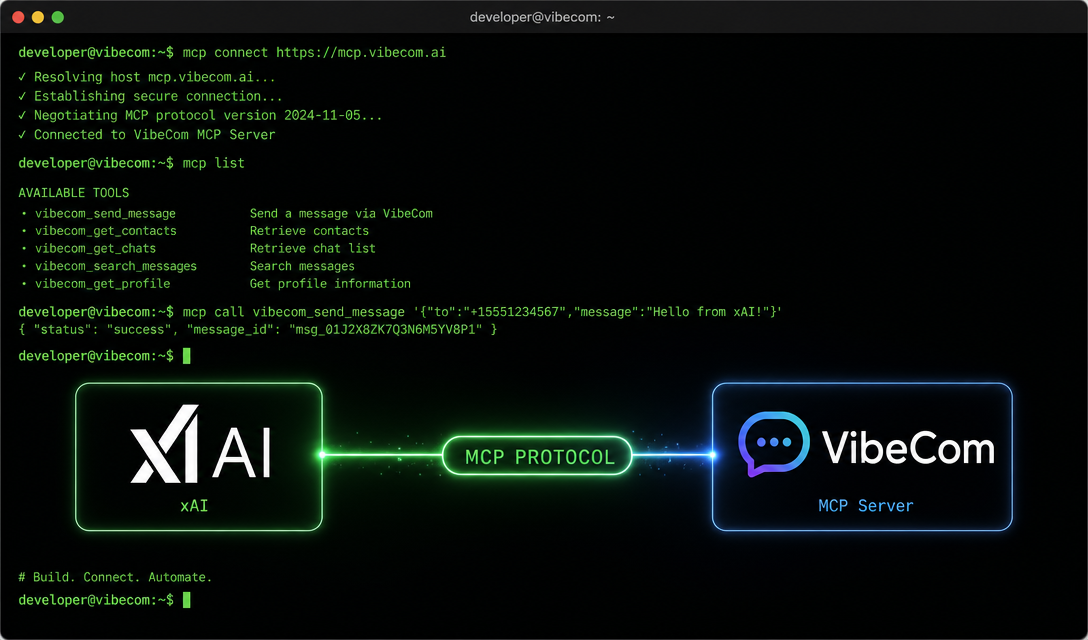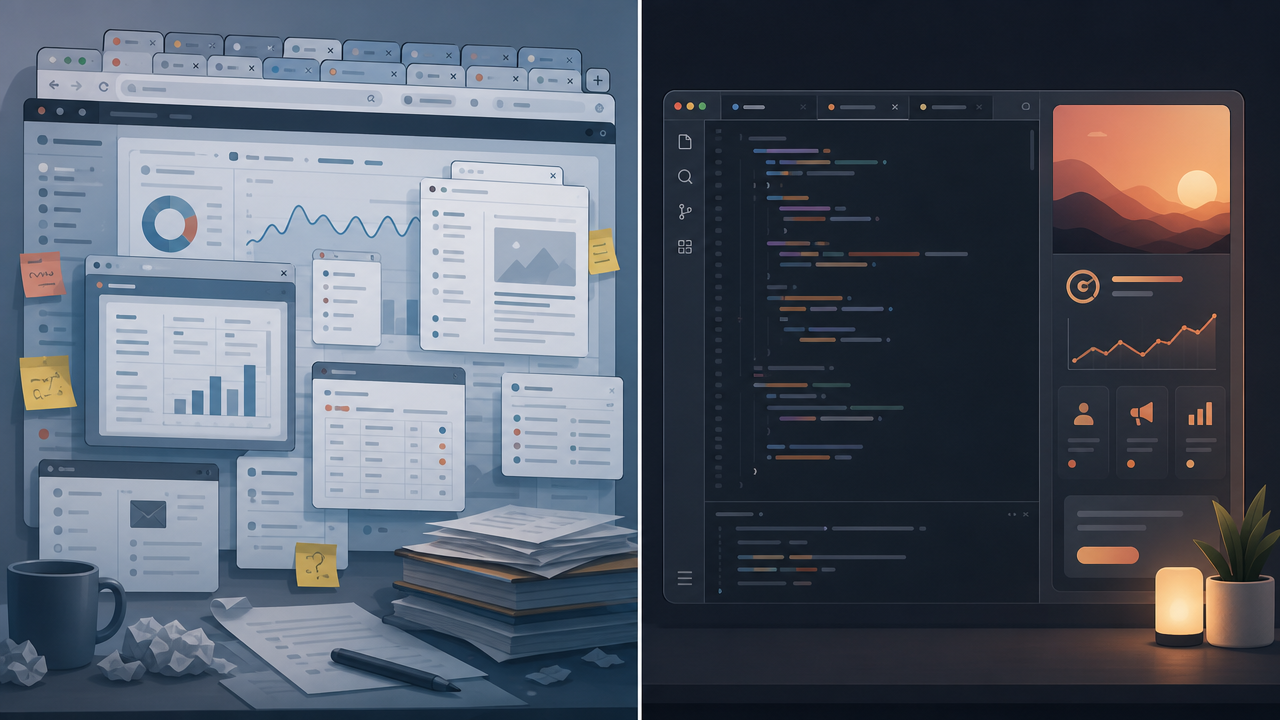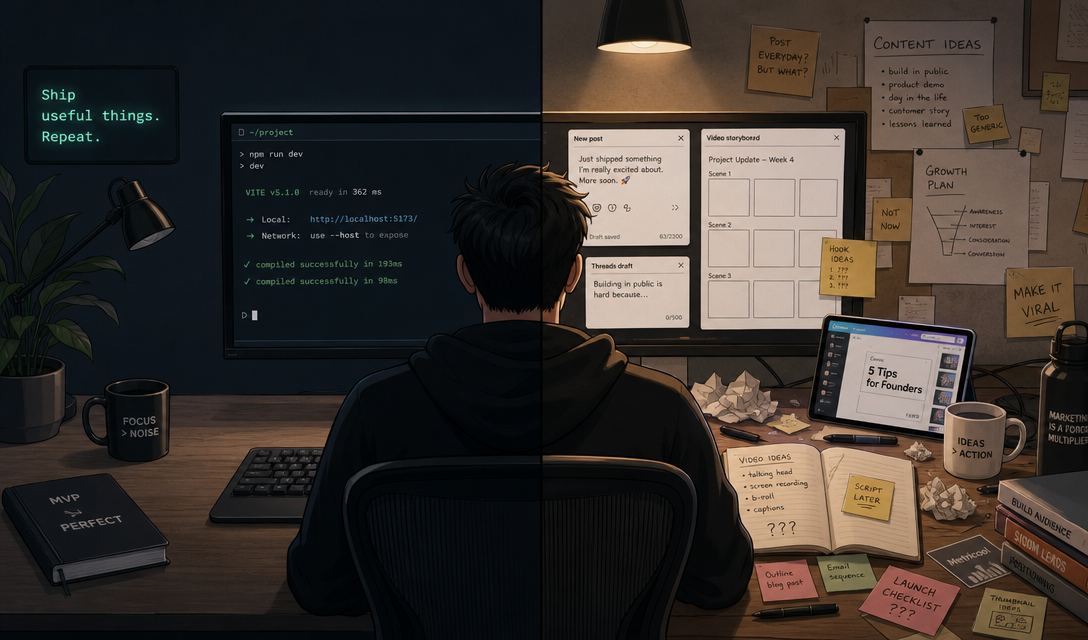
Vibe coding has changed everything.
With Cursor, v0, Bolt, or Claude, you can go from idea to working app in a weekend. What used to take a team of engineers months can now be shipped by a solo founder with no traditional coding background.
This is genuinely incredible. It's also genuinely dangerous.
Because vibe coding makes it so easy to build, the temptation to skip validation is overwhelming. Why spend two weeks talking to customers when you could just ship something and see what happens?
Here's why: building the wrong thing fast is still building the wrong thing. And the faster you build, the more code you have to throw away.
This guide shows you how to validate before you vibe-code — so the thing you build is something people actually want.
The Vibe Coder's Validation Problem
Traditional startup validation advice was written for a world where building took months. The formula was: validate extensively → build slowly → ship carefully.
Vibe coding breaks that assumption. You can ship something in 48 hours. So should you validate for weeks before you do?
Not weeks. But a few days? Absolutely yes.
Here's the thing: vibe coding speeds up the building part. It doesn't change the fundamentals of whether people want what you're building. Those fundamentals haven't changed:
- Does the problem actually exist?
- Are people actively looking for a solution?
- Would they pay for it?
- Is the market big enough to build a business?
Spending 3 days validating before 3 days of building is a 1:1 ratio. That's reasonable. Spending 0 days validating before 3 days of building is how you end up with a great-looking app that nobody cares about.
The 3-Day Validation Framework for Vibe Coders
Day 1: Market Research (AI-Powered, 2–3 Hours)
Use AI tools to research the market before you write a single prompt.
Step 1: Competitive scan (30 minutes)
Search for every tool that currently solves your problem. For each one:
- What does it cost?
- Who is it for?
- What do reviewers complain about?
The complaints are your product strategy. Build what competitors failed to build.
Step 2: Search demand check (15 minutes)
Google your problem statement. Check Google Keyword Planner or Ahrefs for search volume around your key phrases. Are people actively searching for solutions?
If you're building "a tool for X" and "how to do X" gets 10,000+ monthly searches, that's organic demand you can tap. If there are zero searches, either the problem doesn't exist or you need to rethink how you describe it.
Step 3: Community check (30 minutes)
Find Reddit threads, Discord communities, Slack groups, or forums where your target users hang out. Are they talking about this problem? Are there recommendation threads asking for the exact tool you're building?
Real community discussion is the strongest early signal that demand exists.
Step 4: Use AI for the heavy lifting
does all of the above simultaneously. Drop in your idea and get:
- Competitor landscape with pricing and gaps
- Market size estimates
- Customer pain analysis from real community data
- Go-to-market channel recommendations
What would take you a day of manual research takes 10 minutes with AI.
Day 2: Customer Conversations (5–10 Calls or DMs)
This is the step most vibe coders skip. Don't.
Reach out to 10 people who match your target user profile. Not friends. Not family. Actual potential customers.
Where to find them:
- LinkedIn (search for job titles in your target industry)
- Reddit (communities where your target users hang out)
- Twitter/X (search for people talking about the problem)
- Your own network (if applicable)
What to ask (15 minutes per conversation):
- How do you currently handle [the problem]?
- What's the most annoying part of your current approach?
- Have you tried any tools for this? What happened?
- How much time/money does this problem cost you?
What you're listening for:
- Strong emotional language about the pain
- Existing workarounds (proof the problem is real)
- Spontaneous mentions of budget or willingness to pay
If 5 out of 10 people are genuinely excited about the problem you're describing, you have signal. If people shrug, keep looking.
Day 3: Problem-Solution Fit Check
Before you build, answer these questions with evidence (not assumptions):
Problem questions:
- Is this a daily/weekly problem or a monthly/quarterly one? (Daily is better for retention)
- Do people have manual workarounds? (If yes, the problem is real)
- Are people currently paying to solve this? (If no, proceed with caution)
Market questions:
- Can you describe your ideal first 100 customers precisely?
- Do you have a way to reach them without spending money on ads?
- Is the market large enough for a sustainable business?
Competitive questions:
- What's your one key differentiator?
- Why would someone switch from what they use today?
If you can answer all of these with real evidence from your Day 1 and Day 2 research, you're ready to build.
Write a PRD Before Your First Prompt
This is specific advice for vibe coders: write a PRD before you open Cursor.
Here's why: AI coding assistants produce dramatically better output when you give them clear context. "Build me a project management app" produces generic code. A PRD that says exactly who the user is, what they need to do, and what's out of scope produces focused, coherent code.
Your PRD doesn't need to be long. It needs to answer:
- Who is this for?
- What problem does it solve?
- What are the 3–5 must-have features for v1?
- What is explicitly NOT in v1?
- What does success look like?
Paste this into your Cursor project's CLAUDE.md or equivalent context file. Now every prompt you write has this context — and your AI assistant won't hallucinate features you didn't want.
See our full guide:
The Vibe Coder Validation Checklist
Before your first commit:
- I've identified 3–5 direct competitors and understand their weaknesses
- I've found real community discussion about this problem (Reddit, forums, Slack)
- I've spoken to at least 5 potential users about the problem (not the solution)
- I've heard specific, emotional language about pain points from real people
- I have a clear target user I can describe precisely
- I have a PRD with explicit MVP scope and non-goals
- I know where my first 20 users will come from
If you can check all of these, you're ready to vibe-code with confidence.
The Vibe Coder's Unfair Advantage
Here's the truth: most indie hackers and vibe coders never validate. They build what seems fun, launch to silence, get discouraged, and repeat.
The few who validate before building are the ones who build things people actually pay for. And with AI research tools, that validation now takes days, not weeks.
You have two superpowers as a vibe coder in 2026:
- You can ship an MVP in a weekend
- You can validate a market in a day
The founders who combine both are the ones who win.
Build fast. But build the right thing.