One of the most common startup mistakes: assuming your idea has no competitors.
Every idea has competitors. If people have the problem you're solving, they're solving it somehow — even if that means spreadsheets, manual processes, or a dozen different tools stitched together. Those are your competitors too.
Understanding your competitive landscape before you build is how you find the gaps, avoid the traps, and position your product to win.
Here's how to do it.
Why Competitor Analysis Matters More Than Founders Think
Most founders do competitive research to answer one question: "Does my idea already exist?" That's too narrow.
Competitor analysis is actually about:
- Validating the market — competitors prove people pay to solve this problem
- Finding product gaps — what competitors fail to do is your opportunity
- Setting pricing strategy — what the market already pays anchors your pricing
- Crafting positioning — knowing what competitors claim lets you claim something different
- Understanding customer expectations — features competitors offer become table stakes; you need to know them
Done well, competitive analysis turns into product strategy, marketing strategy, and pricing strategy simultaneously.
Step 1: Map the Competitive Landscape
Start by finding every type of competitor — not just the obvious ones.
Direct Competitors
Companies solving the exact same problem for the same customer at a similar price point.
How to find them:
- Google your problem statement: "software for [your customer type] to [solve your problem]"
- Search Product Hunt, G2, Capterra, and GetApp for your category
- Search relevant subreddits (r/entrepreneur, r/saas, or niche communities) for tool recommendations
- Ask LinkedIn connections in your target market what they use
Indirect Competitors
Products solving the same problem differently, or adjacent tools customers might use instead.
Examples:
- If you're building project management software, indirect competitors include email (people use email threads instead of project tools), Notion, and even physical whiteboards
- If you're building HR software, indirect competitors include Excel spreadsheets and outsourced HR consultants
"Build Your Own" Competition
If your target customers are technical, they may build internal tools instead of paying for yours. This is a factor to consider.
Non-consumption
Sometimes the biggest competitor is "doing nothing." If the problem isn't painful enough, customers won't pay for any solution — including yours.
Step 2: Analyze Each Competitor
For each direct and key indirect competitor, gather this information:
Positioning and Messaging
- What do they claim to do? (Homepage headline)
- Who is their stated target customer?
- What's their primary value proposition?
Product
- What features do they offer?
- What integrations do they support?
- What does the product actually look like? (Sign up for a trial)
- What's the UX quality?
- What's missing?
Pricing
- What pricing tiers do they offer?
- What's included at each tier?
- Is pricing per seat, per feature, or flat?
- Is there a free tier or trial?
Customers and Reviews
- Who are their biggest customers? (Look at their case studies, logos on homepage)
- What do customers love? (Read G2, Capterra, Trustpilot, App Store reviews)
- What do customers complain about? (This is gold)
Traction
- How long have they been around?
- Any public revenue numbers or funding announcements?
- How active are they on social? (Team size, hiring pace)
- What's their Alexa rank or SimilarWeb traffic?
Step 3: Build a Competitive Matrix
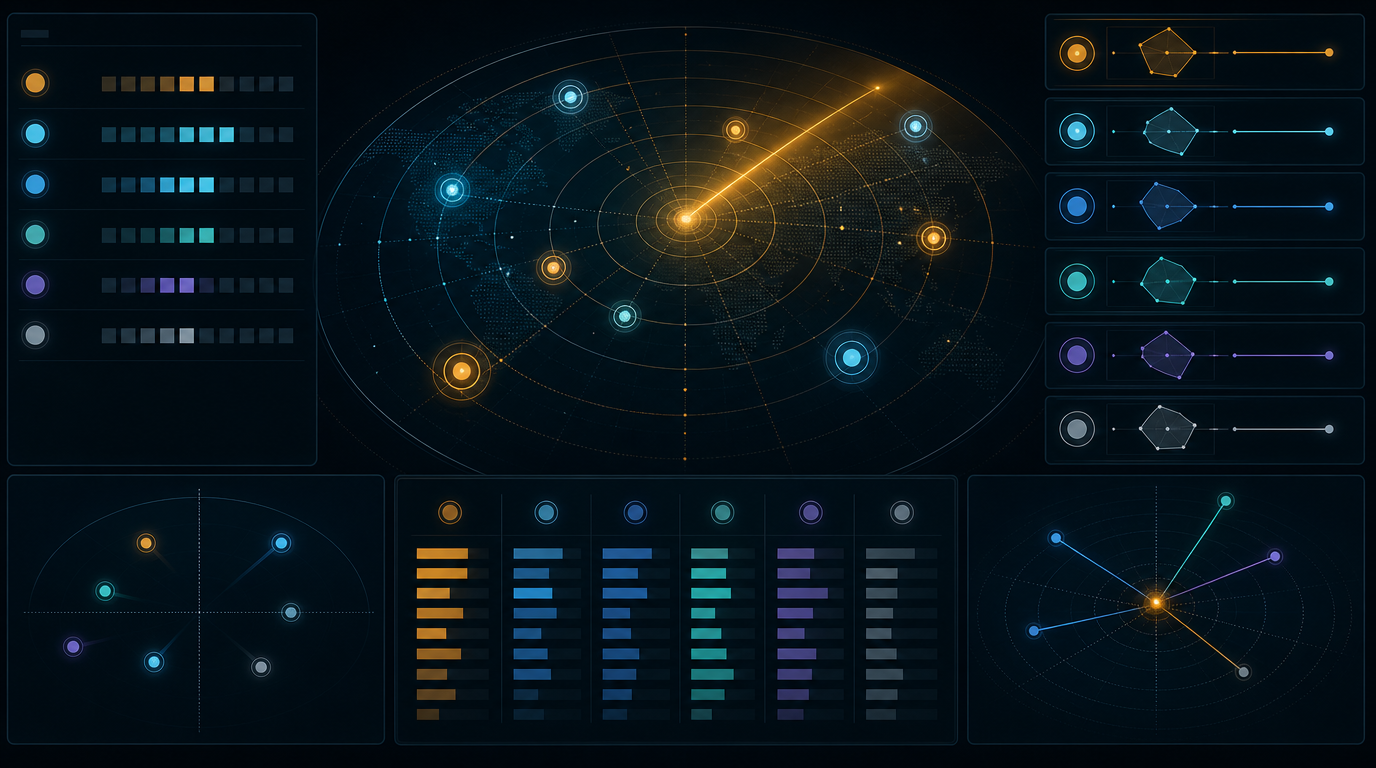
Create a simple spreadsheet comparing competitors across key dimensions:
| Feature / Attribute | You | Competitor A | Competitor B | Competitor C |
|---|---|---|---|---|
| Price (entry tier) | $X/mo | $Y/mo | $Z/mo | Free |
| Feature 1 | ✓ | ✓ | ✗ | ✓ |
| Feature 2 | ✓ | ✗ | ✓ | ✗ |
| Integration: Slack | ✓ | ✓ | ✗ | ✗ |
| Mobile app | ✓ | ✗ | ✓ | ✓ |
| Target customer | SMB | Enterprise | SMB | Freelancer |
This matrix does two things: reveals gaps where you can differentiate, and shows where you need to at least match the market (table stakes features).
Step 4: Mine Customer Reviews for Insights
This is the highest-leverage step that most founders skip.
Negative reviews of competitors are a treasure map. They tell you exactly what customers want that they're not getting.
Where to look:
- G2 and Capterra reviews (sort by "Most Critical")
- Reddit threads: "[Competitor name] alternatives" or "[Competitor name] review"
- App Store and Google Play reviews
- Twitter/X: search "[competitor] problems" or "[competitor] sucks"
What to capture:
- Most common complaints (these are your product opportunities)
- Features repeatedly requested (these belong in your roadmap)
- Reasons people switched away (these are your acquisition angles)
- Specific customers mentioned in reviews (potential early adopters for you)
Pattern to look for: If 20% of reviews for competitors mention the same complaint, that complaint is your product's headline feature.
Step 5: Identify Your Competitive Position
After your analysis, you should be able to answer:
Where is the gap in the market?
- Is there a price gap? (All competitors are expensive — is there room for a cheaper option targeting a different segment?)
- Is there a feature gap? (Everyone has feature X but nobody has feature Y, which customers repeatedly request?)
- Is there a customer gap? (Everyone targets enterprise but no one serves SMBs well?)
- Is there a UX gap? (All competitors are technically capable but hard to use?)
What is your one differentiator? Pick one thing you'll be meaningfully better at than any alternative. Not five things. One.
"We're faster, cheaper, and easier to use" is not a differentiator. "We're the only [product category] built specifically for [specific customer type] that [specific differentiating capability]" is a position.
Step 6: Validate Your Position with Customers
Your competitive analysis is hypothesis, not fact. Test it with real conversations.
When you talk to potential customers, ask:
- "What tools are you currently using for this?"
- "What do you like about [Competitor X]? What's frustrating?"
- "Have you tried [Competitor Y]? Why did you stop/why are you still looking?"
Customers will validate or challenge your assumptions about the competitive landscape. They often know players you missed, or reveal that a competitor you thought was weak is actually well-loved.
Using AI for Competitive Analysis
Manual competitive research takes days. AI can compress it to minutes.
uses real-time web research to:
- Identify all direct and indirect competitors automatically
- Summarize their positioning, pricing, and key features
- Extract common customer complaints from reviews
- Identify market gaps and differentiation opportunities
- Generate positioning recommendations
Instead of spending a week building your competitive matrix, you can have a comprehensive competitive analysis in the time it takes to drink a coffee.
What Good Competitive Analysis Leads To
By the end of your competitive analysis, you should have:
- A list of 5–10 competitors (direct and indirect) with key details
- A competitive matrix comparing features and positioning
- A clear list of customer complaints about existing solutions
- One primary differentiator — the thing you'll be better at than anyone else
- A positioning statement that specifically references your key advantage
This feeds directly into your product roadmap (build what competitors don't have), your pricing strategy (anchor to the market), and your marketing copy (talk to the frustrations customers have with alternatives).
The Bottom Line
Competitors are not your enemy. They're proof that a market exists.
The founders who succeed aren't the ones who have no competition — they're the ones who understand their competition deeply enough to position better, price smarter, and build what customers actually want.
Do the research before you build. The best product rarely wins; the best-positioned product does.