TL;DR / Key Takeaways
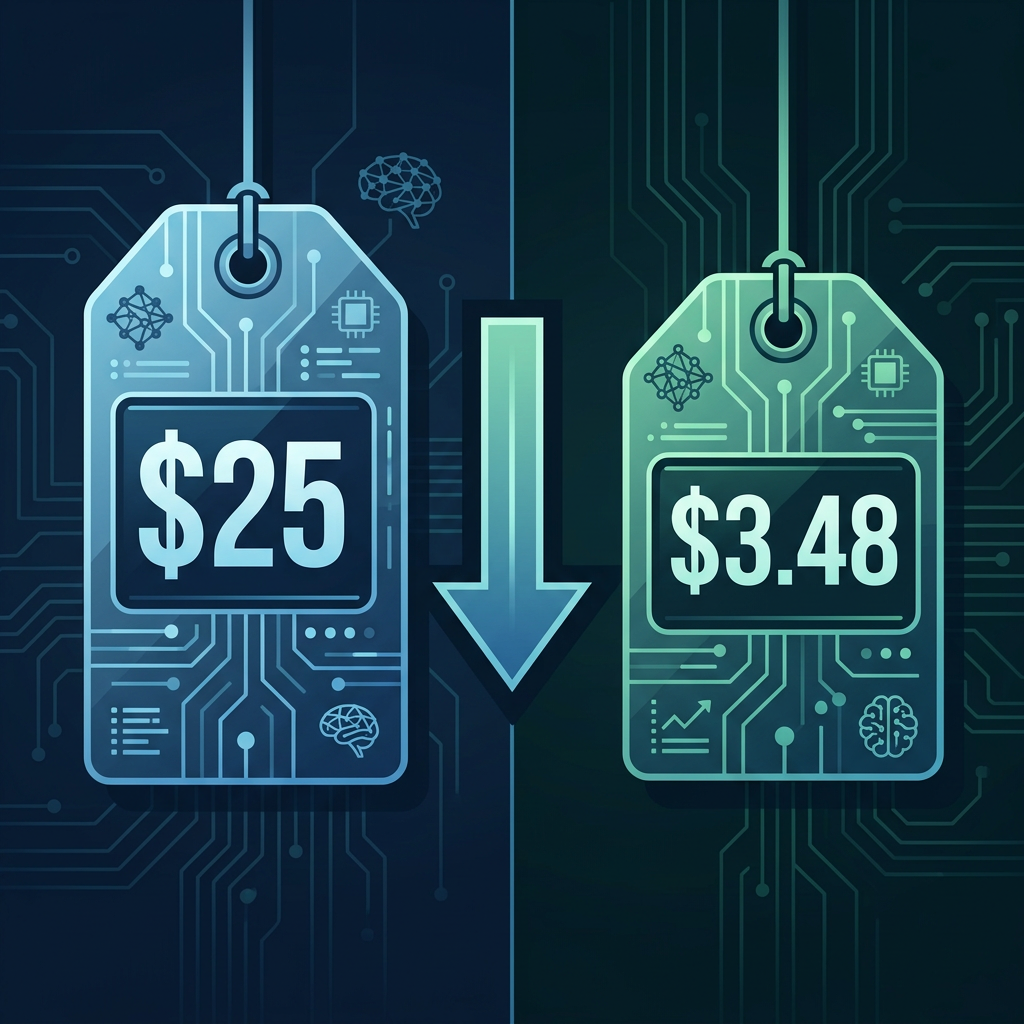
- DeepSeek V4-Pro matches Claude Opus 4.6's coding performance at $3.48 vs $25 per million tokens — a 7x cost collapse that changes agentic workflow economics overnight
- Claude Opus 4.7 now scores 87.6% on SWE-bench Verified; GPT-5.4 hits 74.9% — AI can write production code better than most developers
- The bottleneck in 2026 is no longer building. It's knowing what to build and validating the market before a single line of code runs
- Most founders still skip structured validation — not because they don't care, but because there was no fast, credible way to do it
- An AI startup idea validator that uses live agentic research (not a single LLM prompt) is the missing layer between idea and execution
In April 2026, DeepSeek released V4-Pro — a model that scores 80.6% on the SWE-bench Verified coding benchmark. Claude Opus 4.6 scores 80.8%.
The performance gap: 0.2 points.
The cost gap: $3.48 vs $25 per million output tokens.
For founders running agentic workflows — multi-step AI pipelines that do real research, generate structured documents, or synthesize live data — this is a structural shift. Workflows that cost $500 a month to run are now $70. The economics of building AI products changed in a single product release.
But here's what that shift actually means for founders:
Cheaper AI doesn't make the hard part easier.
The hard part was never the model. It was never the cost of compute. It's the judgment call at the beginning — which idea, which market, which customer segment, which GTM motion. And that judgment call still requires structured research, live data, and a framework that forces you to stress-test assumptions before you write your first prompt.
This is what an AI startup idea validator actually does — when it's built right.
The Benchmark Numbers That Reframe the Problem
Let's start with the data that should change how every founder thinks about their build process.
As of April 2026:
- Claude Opus 4.7: 87.6% on SWE-bench Verified, 64.3% on SWE-bench Pro
- GPT-5.4: 74.9% on SWE-bench Verified
- DeepSeek V4-Pro: 80.6% on SWE-bench Verified — at $3.48/million output tokens
SWE-bench Verified measures the ability to resolve real GitHub issues in open-source repositories. An 87.6% score means Claude Opus 4.7 successfully fixes real-world software bugs at a rate that exceeds most professional developers.
The implication is uncomfortable but important: the coding layer has largely been automated. Not perfectly — but well enough that the constraint on shipping is no longer writing code.
The constraint is deciding what to build. And validating that the market actually wants it.
Why the Build Barrier Collapsing Makes Validation More Important, Not Less
This is the counterintuitive part that most founders miss.
When building was hard, bad ideas got filtered naturally. You had to commit significant time and money before you could ship. That friction forced at least some market thinking.
When building is easy — when a functional MVP takes a weekend with Cursor or Lovable — the friction disappears. And so does the forcing function to think carefully first.
The data backs this up. "No market need" still causes 40–42% of startup failures in 2026. Vibe coding adoption is up over 500% year-over-year. The failure rate for the core problem — building something nobody wants — hasn't moved.
Faster building didn't fix the validation gap. It made it worse.
A founder who can ship in a weekend can also fail in a weekend. And then ship again, and fail again, and iterate by volume rather than by insight. That's not a strategy. It's expensive randomness.
What Most "AI Startup Idea Validators" Actually Do (And Why It's Not Enough)
The market for startup idea validation tools has grown significantly alongside the vibe coding wave. Tracxn counts 117+ active tools in the space as of 2026.
Most of them share a structural problem: they're single-model, single-prompt tools with no live data access.
Ask a single LLM "what's the TAM for a project management tool for freelancers?" and it will produce a confident, plausible-sounding number. It has no incentive to say "I don't know" — it's trained to be helpful. So it fills the gap with what sounds right.
This is why founders on r/SideProject and Indie Hackers consistently flag the same complaint: "It's just ChatGPT text dressed up as research."
The most common request in those communities? Real market research instead of made-up data.
The problem isn't AI — it's architecture. One model, one prompt, no live web access equals sophisticated guessing. A real AI startup idea validation tool needs:
- Live data access — actual competitor pricing, real search signals, current market sizing
- Multi-step agentic workflow — not one prompt, but a pipeline that researches, synthesizes, and stress-tests
- Structured outputs — not a chatbot conversation, but artifacts you can act on: VC scorecard, competitor map, PRD, GTM strategy
The Real Cost of Skipping Validation in 2026
Here's a number worth sitting with: the median cost of a custom MVP in 2026 is $28,000. No-code and vibe-coded MVPs still run $1,000–$8,000.
Most founders spend $0 on validation before that.
With AI costs collapsing — DeepSeek V4-Pro at $3.48/million tokens means a full agentic research pipeline costs a few dollars to run — there's no longer a cost argument for skipping validation. The research layer is cheap. The consequence of skipping it is not.
The real cost of building the wrong thing in 2026 isn't just the development time. It's:
- 4–8 weeks of build time
- $1,000–$28,000 in development costs (depending on approach)
- The opportunity cost of not building the right thing instead
- The psychological toll of shipping to silence
A structured validate startup idea process — run before the first line of code — eliminates most of that risk. Not all of it. But most.
What a Real Validation Workflow Looks Like
This is what VibeCom's agentic pipeline does — and what any serious validation process should include:
Step 1: Market sizing with live data Not a single LLM estimate. A multi-source synthesis: search volume signals, competitor revenue proxies, industry reports, and segment sizing. TAM/SAM/SOM grounded in verifiable inputs.
Step 2: Competitive landscape from live sources Actual competitor pricing pulled from their websites. Feature comparisons. Positioning gaps. Not what the model thinks competitors do — what they actually charge and offer today.
Step 3: Customer ICP and pain point mapping Who is urgently paying for this problem right now? What are they using instead? What would make them switch? These aren't hypothetical — they're derivable from community discussions, job postings, and product reviews.
Step 4: VC-grade scorecard A structured assessment across market, founder-market fit, problem-solution fit, competition, business model, GTM, and execution. Not a pass/fail — a weighted score with specific rationale per dimension.
Step 5: PRD and GTM strategy The artifacts you actually need to start building well. A PRD that reflects real market gaps, not founder assumptions. A GTM thesis that doesn't require a $50K ad budget to test.
This workflow — run before a single line of code — is what separates founders who break out from founders who stall at $300 MRR.
The AI Cost Collapse Changes the Math on Validation Tools Too
One more implication of the DeepSeek V4-Pro release that's worth flagging for founders evaluating AI startup advisor tools:
The cost of running a serious agentic research pipeline has dropped dramatically. A workflow that required expensive API calls in 2025 can now run at a fraction of the cost using models like DeepSeek V4-Pro for high-volume tasks and Claude Opus 4.7 for synthesis.
This means the per-report pricing model that tools like DimeADozen ($59/report) and Preuve AI ($29/report) use is increasingly hard to justify. The underlying cost of the research has collapsed. The value of running multiple validations — testing different ideas, iterating on positioning, re-validating after a pivot — is higher than ever.
Subscription-based validation at $8–$50/month is the model that fits how founders actually work: multiple ideas, ongoing iteration, not a one-time gate.
FAQ
What is an AI startup idea validator? An AI startup idea validator is a tool that uses artificial intelligence to assess the viability of a business idea before you build it. The best ones use agentic workflows with live data access to produce market sizing, competitive analysis, customer ICP, and GTM strategy — not just a single LLM opinion.
How is an AI startup idea validator different from just asking ChatGPT? ChatGPT (or any single LLM) has no live web access for real-time data and no structured framework to stress-test your assumptions. A purpose-built validator uses multi-step agentic research, pulls live competitor pricing and market signals, and outputs structured artifacts (VC scorecard, PRD, GTM plan) rather than a conversational response.
How much does it cost to validate a startup idea with AI? With current model pricing (DeepSeek V4-Pro at $3.48/million tokens), the compute cost of a full agentic validation pipeline is a few dollars. Tools like VibeCom pass this efficiency to founders through subscription pricing ($8–$50/month) rather than per-report fees.
When should I validate my startup idea? Before you write the first line of code — or before you spend significant time on any MVP. The earlier you validate, the cheaper the course correction. Validation after launch is damage control. Validation before is strategy.
What does a good startup idea validation output include? At minimum: TAM/SAM/SOM market sizing with sources, a competitive landscape with real pricing data, a customer ICP with identified pain points, a VC-style scorecard, and a PRD or GTM framework. Anything less is an opinion, not research.